

Established in 2020, the Carnegie China Fellowship is a premier, policy-focused fellowship designed to support rising American scholars focused on understanding China’s rise and its implications for the world and the United States.
Currently on its fifth cohort, the program bridges the gap between the worlds of academia and policy, with its fellows and alumni playing vital roles in informing the ongoing policy debates, both in Washington and around the globe.
To apply for the next cohort, see our Fellowship Guidelines and Application.
Current Fellows

Alexsia T. Chan is associate professor of government at Hamilton College and author of "Beyond Coercion: The Politics of Inequality in China" (Cambridge University Press 2025). Her research examines the international and domestic politics of authoritarian regimes, with a focus on Asia. She received her PhD in Political Science from the University of California, Berkeley.
Chan’s project examines how China and the United States are competing as rivals in Southeast Asia, particularly how frameworks have not kept pace with new patterns of profound dislocation in the Asia-Pacific and disruption in great power politics. This paper, drawn from a larger scholarly book project, lays out the policy problem of U.S.-China competition within this region, shows why policy and theoretical approaches rooted in past political dynamics are inadequate for the current security environment based on fieldwork conducted across Asia and the U.S., and provides policy recommendations for U.S. practitioners.
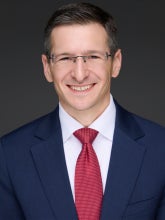
Zack Cooper is a senior fellow at the American Enterprise Institute, where he studies US strategy in Asia. He also teaches at Princeton University and serves as chairman of the board of the Open Technology Fund. He previously served on staff at the White House and Pentagon. Cooper has also worked at the Center for Strategic and International Studies, the German Marshall Fund of the United States, the Center for Strategic and Budgetary Assessments and Armitage International. Cooper holds a BA from Stanford University and an MPA and PhD from Princeton University. He is the author of "Tides of Fortune: The Rise and Decline of Great Militaries" (Yale University Press, 2025).
Cooper’s project focuses on how, over the last quarter century, China’s military has transformed, alongside the regional military balance. Previously, China had invested in classic anti-access weapons but today Beijing is following the traditional path of a rising great power — developing power projection forces such as aircraft carriers. This project tracks this shift quantitatively and contrasts it to changes in the U.S. military since the beginning of the 21st century.
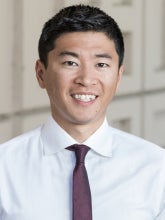
Jeffrey Ding is an assistant professor of political science at George Washington
University. Ding’s research centers on great power cooperation and competition in emerging technologies, with a focus on artificial intelligence. His book "Technology and the Rise of Great Powers," awarded the Lepgold Prize for best book in international relations, was published with Princeton University Press in 2024. Other work has been published in European Journal of International Relations, International Studies Quarterly, Review of International Political Economy and Security Studies, among other venues. His research has also been cited in The New York Times, The Washington Post and other outlets. He received his PhD in 2021 from the University of Oxford and earned his BA in 2016 at the University of Iowa.
Ding’s project asks, what is China’s current level of civil-military integration? This project develops a novel framework to measure integration across four main channels through which the commercial and defense sectors can foster synergistic relationships.
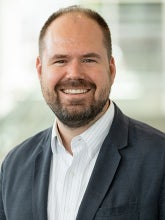
Manfred Elfstrom is associate professor of political science in the Department of Economics, Philosophy and Political Science at the University of British Columbia’s Okanagan campus. His research concerns China, social movements, labor and authoritarianism. He is the author of "Workers and Change in China: Resistance, Repression, Responsiveness" (Cambridge University Press, 2021). Elfstrom’s work has appeared or is forthcoming in China Quarterly, Comparative Politics, Government & Opposition, Industrial and Labor Relations Review, Studies in Comparative International Development and elsewhere. He has also contributed to Daily Beast, Foreign Policy, Jacobin and South China Morning Post. Before entering academia, Elfstrom worked for several years in the nonprofit world, supporting workers’ rights and improved grassroots governance in China.
Elfstrom’s research explores the history of how the labor movement in the United States has long struggled with how to approach China. This project draws on the experiences of participants in worker exchanges in the 2000s and 2010s to explore possible paths forward.

May Farid is an assistant professor at the Kroc School of Peace Studies, University of San Diego. Her research explores how community groups shape state policies in various contexts: grassroots NGO advocacy in China, cross-sector knowledge communities and local policy and INGOs promoting global environmental governance in China's outbound investment. Another branch of her research studies NGO interventions to empower citizens in the global South, such as fighting misinformation and promoting social cohesion in India. Her work has been published in Nature: Human Behavior, International Affairs, World Development, and the Journal of Chinese Political Science. Farid previously conducted research at the Stanford Center on China's Economy and Institutions and taught at the University of Hong Kong. She also worked in China’s nonprofit sector and policy research under the State Council for over a decade. She is a U.S. citizen of Iranian descent who grew up in China.
Farid’s project examines how traditional advocacy approaches designed for a Western-led global governance architecture are becoming less effective in a changing global order. By analyzing the strategies of local community groups and international NGOs in recipient countries of China’s overseas aid and investment, this study examines how environmental governance and policy change are evolving amid growing authoritarianism, multipolarity and challenges to established international institutions.
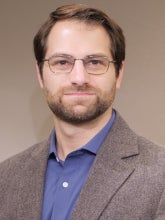
Joshua B. Freedman is a writer and political scientist focused on contemporary politics, society and ideas. He is a senior editor at Foreign Affairs magazine and an affiliated research scholar at the Center for the Study of Contemporary China at the University of Pennsylvania. His research, writing and analysis have appeared in China Quarterly, Foreign Affairs, The Atlantic and many other publications. He holds a PhD in government from Harvard University.
Freedman’s project to assess the current state of social policy in China and explore the ideological underpinnings of the party’s current approach to social spending. It will trace the evolution of the concept of “welfarism” over time in China and unpack how party leaders have understood the relationship of the welfare state to economic growth. A deeper analysis of the ideas shaping policymaking can shed light on the state of contemporary social policy and the prospects for economic rebalancing in China.

Timothy A. Grose is associate professor of China studies at Rose-Hulman Institute of Technology. His scholarship on ethnicity and governance in Xinjiang has been published in The China Journal, Ethnic and Racial Studies, Hau and other leading journals. His first book "Negotiating Inseparability in China" (Hong Kong University Press, 2019) was awarded the 2020 Central Eurasian Studies Society book prize in the social sciences. His forthcoming book, "Settling Xinjiang" (University of Washington Press), examines how the everyday governance of Uyghurs sustains a contemporary settler-colonial project in the region. His public commentary on the crisis in the Uyghur homelands has been featured in ChinaFile, Foreign Policy, The Diplomat and Sup China among other outlets.
Grose’s project examines how ongoing Chinese state violence continues to impact Uyghur communities and erode cultural life in the Xinjiang Uyghur Autonomous Region, despite U.S. sanctions imposed in response to human rights abuses. It argues for a reassessment of current U.S. policy, advocating for greater diplomatic engagement and increased support for Uyghur diaspora communities.
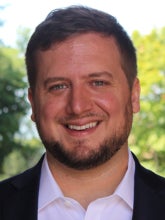
Lincoln Hines is an assistant professor in the Sam Nunn School of International Affairs at the Georgia Institute of Technology. Previously, he was an assistant professor for the West Space Seminar at the U.S. Air War College. His research focuses on Chinese foreign policy and security, the politics of outer space, public opinion and questions regarding status and nationalism in world politics. His research and policy commentaries have appeared in outlets such as Research & Politics, Texas National Security Review, Space Policy, The Washington Quarterly and The Washington Post. Previously, he was a Guggenheim predoctoral fellow at the National Air and Space Museum and a nonresident WSD-Handa fellow at the Pacific Forum. He holds a PhD in government from Cornell University, an MA in international affairs from American University’s School of International Service and a BA in foreign affairs and East Asian studies from the University of Virginia.
Hines’s work analyzes how Chinese analysts and policymakers understand the role of space in deterrence and for escalation. How do they understand the risks of escalation and of debris generation? To answer these questions, this project draws on a wide array of Chinese sources to examine how key actors in China’s space community view the role of space in Chinese military strategy.
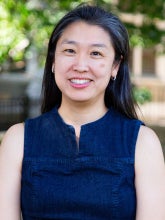
Denise Y. Ho is an associate professor in Georgetown University’s School of Foreign Service, where she teaches modern Chinese history. She is the author of "Curating Revolution: Politics on Display in Mao’s China" and co-editor of Material Contradictions in Mao’s China and a special issue entitled Transformation of Shen-Kong Borderlands. Ho is currently completing a book manuscript entitled "The Nation’s Gate: A Cross-Border History of Hong Kong and China." Her articles and reviews appear in China Quarterly, The American Historical Review, Modern China and others.
Ho’s project explores China’s Greater Bay Area in historical context. In 2019, China’s President Xi Jinping released a plan for the Greater Bay Area, a project of economic development and integration that further incorporates Hong Kong and Macau with the major cities of Guangdong Province. Ho’s project traces the origins of the Greater Bay Area in the Pearl River Delta, examining how human migration, infrastructure and other exchanges have both connected and divided South China across the long twentieth century.

Karrie J. Koesel is associate professor of Political Science at the University of
Notre Dame where she specializes in the study of contemporary Chinese and Russian politics. She is the author of "Religion and Authoritarianism: Cooperation, Conflict and the Consequences" (Cambridge University Press, 2014) and co-editor of "Citizens & the State in Authoritarian Regimes: Comparing China & Russia" (Oxford University Press, 2021). Her research has been published in World Politics, Perspectives on Politics, The China Quarterly, Post-Soviet Affairs, Economics and Politics, Democratization and Politics and Religion, among others, and supported by the Minerva Research Initiative, John Templeton Foundation, Spencer Foundation, Social Science Research Council (SSRC), Fulbright program and International Research & Exchanges Board (IREX).
Koesel’s research analyzes political education in contemporary China. It investigates what political knowledge is being transmitted to students, how young people are socialized to be patriotic citizens, and how political education portrays China’s rise and its strategic competitors, including the United States and liberal democracy. This study will inform scholarship and policymakers about micro-foundations of political legitimacy in China and has implications for understanding the evolving dynamics of U.S.-China relations.

Ning Leng is an assistant professor at Georgetown University’s McCourt School of Public Policy. She specializes in the political economy of China and Global China. She is the author of "Politicizing Business: How Firms Are Made to Serve the Party-State in China" (Cambridge University Press, 2025). Her other publications examine China’s infrastructure politics, visibility projects, authoritarianism, public opinion toward China in the Global South and the legal influence of Chinese companies in Latin America. Her publications appear on or are forthcoming at Comparative Political Studies, Review of International Organizations, China Quarterly, Foreign Affairs and others. She holds a PhD in political science from the University of Wisconsin–Madison, and was a postdoctoral fellow at the Harvard Kennedy School.
Leng’s project explores Chinese investments in South America. Focusing on the economic and political activities of Chinese companies in Colombia, Peru, Bolivia and Chile, the project examines their influence on regulatory environments in host countries.

Zongyuan Zoe Liu is the Maurice R. Greenberg senior fellow for China studies at the Council on Foreign Relations (CFR) in New York City. She is also a senior research scholar at the Institute of Global Politics at the School of International and Public Affairs (SIPA) at Columbia University. Her work focuses on international finance, sovereign wealth funds, industrial policies and the geoeconomics of energy transition. Her regional expertise is in East Asia and the Middle East. Liu is the author of "Can BRICS De-dollarize the Global Financial System?" (Cambridge University Press, February 2022) and "Sovereign Funds: How the Communist Party of China Finances its Global Ambitions" (Harvard University Press, June 2023). The book "Sovereign Funds" is the 2024 Winner of the PROSE Award in Business, Finance and Management.
Liu’s project investigates China’s evolving strategies to promote a renminbi-based global financial system and its implications for U.S.-China competition and global financial system. This research is vital for understanding emerging challenges for continued U.S. leadership and global financial stability. It aims to clarify the conceptual and policy differences among renminbi internationalization, de-dollarization and financial sanction mitigation.
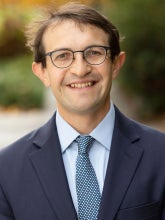
Scott Moore is managing director of global initiatives, research and strategy, practice professor of political science, director of the Penn Global Climate Security and Geopolitics Project, principal investigator of the Penn International Climate Observatory, faculty fellow of the Kleinman Center for Energy Policy and senior advisor to The Water Center at Penn, all at the University of Pennsylvania. His primary research interests center on China, climate change and emerging technologies, especially China’s role in the global biotechnology sector. Moore’s first book, "Subnational Hydropolitics: Conflict, Cooperation and Institution-Building in Shared River Basins" (Oxford University Press, 2018), examines how climate change and other pressures affect the likelihood of conflict over water within countries. His latest, "China’s Next Act: How Sustainability and Technology are Reshaping China’s Rise and the World’s Future" (Oxford University Press, 2022), explores China’s role in global public goods provision against the backdrop of geopolitical rivalry and competition and what it means for action on climate change and other shared global challenges. Prior to joining Penn, Moore was a young professional and water resources management specialist at the World Bank Group and environment, science, technology and health officer for China at the U.S. Department of State, where he worked extensively on the Paris Agreement on climate change. He has also served as an advisor on China and strategic competition at the U.S. Department of Defense.
Moore’s project addresses the question of whether China will assume a leading role in global climate governance, particularly as the United States withdraws from the UN Framework Convention on Climate Change (UNFCCC). This report addresses that question by defining international climate leadership along two dimensions—diplomatic and financial—and measuring each using new data from the China Climate Diplomacy (CCD) database.

Dawn Murphy, associate professor of National Security Strategy at the U.S.
National War College, specializes in Chinese foreign policy, U.S.-China relations and international relations. Her research analyzes China’s interests and behavior as a rising global power in relation to the existing international order. She is the author of "China’s Rise in the Global South: The Middle East, Africa, and Beijing’s Alternative World Order" (Stanford University Press, 2022). Murphy holds a BS in industrial and labor relations from Cornell University, a Master of International Affairs from Columbia University’s School of International and Public Affairs and a PhD in political science from George Washington University. Her previous academic appointments include associate professor of international security studies at the U.S. Air War College, visiting assistant professor of political science at George Washington University and postdoctoral research fellow with the Princeton (Columbia)-Harvard China and the World Program at Princeton University.
Murphy’s research analyzes China’s views of, interests in, and approach to the Middle East since 2017. It asks, how does China view this region in the context of the concept of Great Changes Unseen in a Century? What is the role of the Middle East in Beijing’s global initiatives (e.g., Global Development Initiative, Global Security Initiative, Global Civilization Initiative, Global Governance Initiative and Community of Shared Future for Humankind)?

Kerry Ratigan is associate professor of political science at Amherst College in Massachusetts, USA. Her research focuses on China–Latin America relations, with a focus on the social and political implications of economic ties with China. Previously, she published research on China’s domestic politics, decentralization and welfare state policies. Her book, "Local Politics and Social Policy in China," examines how local politics shaped social policy provision in China under Hu Jintao. Her current research examines how Chinese investment projects impact public opinion of China in Latin America. She has published research in World Development, China Quarterly, Journal of Chinese Governance, International Political Science Review and Studies in Comparative International Development, among others. She received her PhD in political science from the University of Wisconsin–Madison, a master’s degree from the London School of Economics, and a BA in political science and Spanish from Haverford College.
Ratigan’s project examines China’s overseas corporate responsibility. Amid increasing deregulation in the US, China is taking a more active role in regulating overseas investment. Ratigan’s project examines how these regulations, while aiming to protect China's economic and political interests overseas, shape how Chinese firms interact with local stakeholders and host governments in their approaches to environmental, social, and governance issues.

Eric Schluessel is associate professor of history at the University of Oxford and fellow of Keble College. He is a social historian of China and Central Asia whose first book, "Land of Strangers: The Civilizing Project in Qing Central Asia" (2020), won the Fairbank Prize for East Asian History. Further publications include the first English translation of the Tarikh-i Ḥamidi, a vital source for Uyghur history. Schluessel received his PhD from Harvard University in 2016 and previously taught at the University of Montana and the George Washington University, where he served as director of the Sigur Center for Asian Studies. His research has been supported by fellowships from ACLS, the National Endowment for the Humanities, and the Institute for Advanced Study.
Schluessel’s research project recent policing developments in Xinjiang. The Chinese state characterizes many incidents of discontent or violence in Xinjiang as acts of “Islamic extremism,” but the evidence for this at the grassroots is mixed. Schluessel’s project traces changes in and depictions of local modes of organization and mobilization to test whether present conflicts follow patterns from the past or represent something new.